National Service Scheme (NSS)
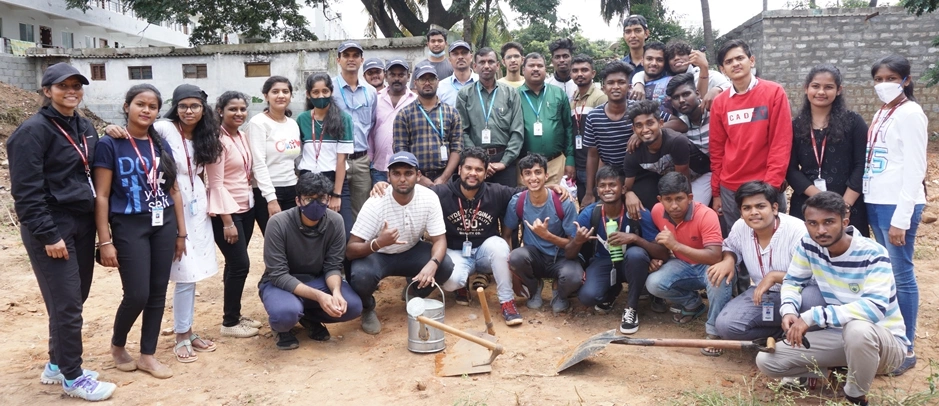
Launched in the Mahatma Gandhi Birth Centenary year 1969 as a student youth service programme, National Service Scheme (NSS) aims at arousing social consciousness of the youth with an overall objective of personality development of the students through community service. SCC has a very vibrant NSS that strives for the welfare of the neighbourhood community.
The main objectives of National Service Scheme (NSS) are:
a) Understand the community in which they work.
b) Understand themselves in relation to their community.
c) Identify the needs and problems of the community and involve them in problem-solving.
d) Develop among themselves a sense of social and civic responsibility.
e) Utilise their knowledge in finding practical solutions to individual and community problems.
f) Develop competence required for group-living and sharing of responsibilities.
g) Gain skills in mobilizing community participation.
h) Acquire leadership qualities and democratic attitudes.
i) Develop capacity to meet emergencies and natural disasters.
Activities
• Visit to Sumanahalli leprosy support centre.
• Campus cleaning programme
• Blood Donation Camp.
• Awareness Rally.
• Visit to Gandhi Museum.
• Week-long camp in an adopted village
• Celebration of national festivals
An NSS volunteer is required to complete 240 hours of community service in two years duration. This includes 20 hours of orientation course, 30 hours for campus work and remaining 70 hours for community services in a year. Further a seven-day special camp will be attended by the NSS volunteers in an adopted village.
Why must you Join the NSS?
It will help you to connect with the needy section of society thus serving to become a good citizen of the country and there are other privileges as well.
1. You can get some weightage during admissions in higher studies and other benefits as decided by the institutions/university.
2. You have opportunities to visit other states through youth exchange programmes such as National Integration Camp, Interstate Youth Exchange and Home Stay programme, Mega Camp, National Youth Festival and Adventure programmes etc.
Enrolment Procedure
1. Submit the filled out enrolment form along with 2 passport size photographs.
2. After being selected, the student will have to sign the register book and that completes the procedure.
Programme Officer: Rev. Dr. Thomas Thennadiyil, Principal, St. Claret College
NSS Officers: Mr. Sharath Kumar S. & Ms. Sanjogita R.
Awards and Achievements
Dr Madesh. N, Former NSS Officer was awarded as “Best NSS Officer” by Bangalore University National Service Scheme during the academic year 2018-2019.

National Cadet Corps (NCC)
The National Cadet Corps is the Indian military cadet corps with its Headquarters at New Delhi. It is open to school and college students on a voluntary basis. National Cadet Corps is a Tri-Services Organization, comprising the Army, Navy and Air Force, engaged in grooming the youth of the country into disciplined and patriotic citizens. The National Cadet Corps in India is a voluntary organization which recruits cadets from high schools, colleges and Universities all over India. The Cadets are given basic military training in small arms and parades. The officers and cadets have no liability for active military service once they complete their course but are given preference over normal candidates during selections based on the achievements in the corps.
NCC Flag Contains NCC Crest in gold in the middle, with the letters "NCC" encircled by a wreath of seventeen Lotus with a background in Red, Blue and Light blue. Red depicts the Army, Deep Blue depicts the Navy and Light Blue depicts the Air Force. The seventeen Lotuses represent the 17 State Directorates.
"UNITY AND DISCIPLINE" (EKTA AUR ANUSHASAN)
is written at the bottom of the NCC Flag.History of NATIONAL CADET CORPS (NCC):
The National Cadet Corps (NCC) has its genesis in the University Corps, which was created under the Defence Act, 1917 with the object to make up the shortage of the Army. In 1920, when the Indian Territorial Act was passed, the University Corps was replaced by the University Training Corps (UTC) in 1942, the UTC was renamed as the University Officers Training Corps (UOTC). The need to create a youth organization at National level to train the young boys and girls to be better citizens and future leaders of our great country in all walks of life, including Defence forces, was rightly realized by our leaders. A Committee under Pandit H.N. Kunzru was set up in 1946 at the behest of our first Prime Minister, Pandit Jawaharlal Nehru. The NCC came into existence on 16th July, 1948 under the NCC Act of 1948 under the Ministry of Defence (MOD).NCC Motto:
The Motto of the NCC is 'UNITY AND DISCIPLINE' which was adopted on 23 Dec 1957.Aim of NCC:
The aims of NCC as approved by MOD in Mar 2001 are as under:● To develop character, comradeship, discipline, leadership, secular outlook, spirit of adventure, sportsmanship and ideals of selfless service among the youth of the country
● To create a human resource of organized, trained and motivated youth, to provide leadership in all walks of life and always be available for the service of the nation
● To provide a suitable environment to motivate the youth to take up a career in the Armed Forces.
Core Values of NCC:
● A sense of patriotic commitment to encourage cadets to contribute to national development.● Respect for diversities in religion, language, culture, ethnicity, lifestyle and habitat to instill a sense of National unity and social cohesion.
● Abiding commitment to learn and adhere to the norms and values enshrined in the Indian Constitution.
● Understanding the value of a just and impartial exercise of authority.
● Ability to participate in community development and other social programme.
● A healthy lifestyle free of substance abuse and other unhealthy practices.
● Sensitivity to the needs of poor and socially disadvantaged fellow citizens.
● Inculcating habits of restraint and self-awareness.
● Understanding the values of honesty, truthfulness, self-sacrifice, perseverance and hard work.
● Respect for knowledge, wisdom and the power of ideas
NCC at St. Claret College
NCC unit at SCC was launched in August 2018 with 108 cadets and sanctioned by 8 KAR BN NCC, under "Bengaluru ‘B’ GROUP" in the Karnataka & Goa Directorate, Bengaluru. Every year 108 Cadets are enrolled in this unit with Lt. Prakash Chandra Behera as the Care Taking Officer (CTO).NCC Activities
Regular activities like Drill, Rifle Drill, Map Reading, Weapon Training, Field Craft and Battle Craft etc., are conducted as per the syllabus framed by NCC Directorate. Anti Drug Rally, Swachcha Bharath Abhiyan, Yoga, Independence Day, Republic Day, Kargil Vijaya Diwas, Road Safety Rally, Blood Donation, Army Awareness, NCC Inter collegiate competitions and NCC Day celebration are the other programs conducted by NCC 8KAR BN wing at SCC.
SCHOLARSHIPS
SCC offers scholarships to both meritorious and students from financially weak and disadvantaged sections through its own scholarship schemes. At the entry level itself, the meritorious students are offered scholarship as per the criterion determined by the management. Keeping in mind the national commitment to diversity and inclusion, due consideration is given to students from socially backward sections and SC/ST communities. The institution also facilitates scholarships endowed by the state/central social welfare departments. The student welfare section of the admin office provides all the required support to avail the scholarships from the state and central governments and non-governmental organisations. The Equal Opportunity Cell (EOC) facilitates student scholarships disbursement.
Kindly contact Mr. Somashekar, Office Staff for more details on scholarships.
Internal Scholarship details
1) Financial Aid Scholarship2) Merit Scholarship
3) Sports Scholarship.
4) Divyangjan Scholarship.
5) Alumni Scholarship.
State Scholarship
1) Backward Classes Welfare Department Scheme.2) Social Welfare Department Scheme.
3) Tribal Welfare Department Scheme.
4) Minorities Welfare Department Scheme.
5) Karnataka State Brahmin Development Board Scheme.
6) Department of Disability Welfare.
National Scholarships
1. Ministry of Minority Affairs. (Post Matric Scholarships Scheme Minorities).2. Ministry of Social Justice and Empowerment. Post matric scholarships for SC and OBC students).
3. Department of Higher Education (Centre Sector Scheme of Scholarships for College and University).
4. Department of Empowerment of Persons with Disabilities (scholarship for top class education with disabilities and post matric scholarships with disabilities).
5. Ministry of Tribal Affairs (Umbrella scheme for education of ST children post matric scholarship, national fellowship and scholarship for higher education of ST students formally top class education for ST students.
6. Ministry of Labour and Employment. (Under various labour welfare funds).
7. Ministry of Home Affairs (Prime minister scholarship scheme for central armed police forces and Assam rifles mm, Prime minister's scholarship for the wards of states and Union Territories Police. Personnel martyred during terror and naxal attacks).
8. Ministry of Railways (Railway Boards) Prime minister's scholarship scheme for ministry of railways).
9. UGC (PG Indira Gandhi scholarship for single girl child, PG scholarship for University rank holders).
MENTORING
At SCC, mentoring is considered one of the best practices since its inception. The mentors invest their time and energy with the mentees to ensure that the mentees get ample opportunities for their holistic development during their stay in the institution. The mentors are highly experienced and deliver value-based guidance and support to the mentees. Mentors try to engage the students' community in various ways, from personal development to professional development. The institution ensures that the mentor-mentee ratio is appropriate to provide personal attention to every mentee.
Roles & Responsibilities of the Mentor
● The mentors monitor the academic progress of the mentees● To provide personal guidance to the students regarding the scholarship, co-curricular activities, add on programs and extension activities.
● To regularly update the parents about their ward’s progress
● To counsel the mentees in case of any disciplinary issues
● To encourage students to complete their internship successfully
● The mentors regularly update the HOD & Principal about the progress of the mentees.
COUNSELLING SERVICES:
College students experience diverse emotional and psychological stressors at college and at home relating to interpersonal relationships, adjustment, educational choice and occupational choice. They face issues relating to making and keeping friends, feelings of inferiority, peer pressure, failures, fear of rejection, poor choices, study habits, depression, anxiety, grief etc. Our professionally qualified full-time counsellors provide personal and psychological counselling to students seeking more in-depth guidance related to their overall well-being. We provide our students with a safe, confidential and non-judgmental environment to share their concerns.
STUDENT COUNCIL
Student Council is a body of students to promote quality in student life. It is a support system for holistic development of the students. The Core Student Council is constituted of two College Captains (a girl and a boy, elected from the final year students); two Cultural Captains (a girl and a boy nominated from the final year batches) and two Sports Captains (a girl and a boy nominated from the final year batches). Similarly, every department has an elected student council composed of two captains (a girl and a boy) from the final year batches and a secretary elected from the second year batches. The larger student council comprises the Core Student Council, the department student council and the elected class representatives and the nominated representatives of various clubs and associations. The student council is involved in organizing the Graduation day, Euphoria- the intra-collegiate cultural and arts competitions, Mayurika- the Inter-collegiate cultural fest, intra and inter-collegiate sports fests and other fests. There are regular Student Council meetings every semester along with the principal and the student council mentors. In this meeting, the students evaluate activities, plan out the up-coming programmes and discuss relevant issues with the Management.
College Student Council
| Category | Name | Class |
|---|---|---|
| College Captain - Boy | Mr. Jonathan S. Varghese | III B. Com TTM |
| College Captain - Girl | Ms. Sanya S. | III B. Com |
| College Cultural Captain - Boy | Mr. Swaroop S. K. | III BCA |
| College Cultural Captain - Girl | Ms. Devanandana S. | III BA |
| College Sports Captain – Boy | Mr. Suhan N. K. | III B. Sc. |
| College Sports Captain - Girl | Ms. Priya Rathore | III BBA |
Department Student Council
| Department/Course | Category | Name | Class |
|---|---|---|---|
| Department Student Captain – Boy | Mr. Adarsh Reddy | III B. Com | |
| B. Com | Department Student Captain – Girl | Ms. Maria Sandra | III B. Com |
| Department Student Secretary | Mr. Varsha N. Kumar | II B. Com | |
| Department Student Captain – Boy | Mr. Gaurav M. Pamnani | III BBA | |
| BBA | Department Student Captain – Girl | Ms. Bharani E. | III BBA |
| Department Student Secretary | Mr. Anne Terese | II BBA | |
| Department Student Captain – Boy | Mr. Milton L. | III BCA | |
| BCA | Department Student Captain – Girl | Ms. Asra Fathima | III BCA |
| Department Student Secretary | Mr. Ranjan V. | II BCA | |
| Department Student Captain – Boy | Mr. Ajay | III BA | |
| BA | Department Student Captain – Girl | Ms. Sharon Mary Cherian | III BA |
| Department Student Secretary | Ms. Flora | II BA | |
| Department Student Captain – Boy | Mr. Adithya Choudhary | III B. Com TTM | |
| B. Com TTM | Department Student Captain – Girl | Ms. Shahziaa Afreen B. | III B. Com TTM |
| Department Student Secretary | Mr. Nikhil M.A. | II B. Com TTM | |
| Department Student Captain – Boy | Mr. Tarun R. | III B. Sc. | |
| BSc | Department Student Captain – Girl | Ms. Shriya Giridhar | III B. Sc. |
| Department Student Secretary | Ms. Shonn Wilfred Dias | II B. Sc. |
STUDENT WELFARE OFFICERS:
The Student Welfare Office works for the all round development of our students. The office is committed to promoting a campus environment that fosters academic success, personal growth and student development. This office provides administrative service for our students. Our welfare officer’s key role is to promote our campus, cultivate a sense of belongingness, create opportunities for students to integrate curricular and co-curricular learning by coordinating various events, act as a liaison between the parents, students and the college management and maintain discipline amongst the student body.
Duties and Responsibilities of the Student Welfare Officers
● To facilitate the conduct of common events - Inauguration, Parent Orientation, Orientation for first-year students, Election, Investiture, Parent teachers meet (one each semester), Thanksgiving and Graduation.● Processing the student awards such as best outgoing student, Kalaprathibha, Kreeda Ratna, etc.
● To monitor the conduct of events, documentations and conduct evaluations of the activities of the Clubs and Associations assigned.
● To arrange for a congenial living environment on the campus including hostels for the students.
● To monitor day-to-day essential support required for co-curricular activities of students.
● To address student grievances related to co-curricular activities of the respective department.
● Scholarships: To monitor and coordinate with mentors for special attention for the weaker and needy sections of students.
● To regularly meet with the student representatives (class representatives and department club representatives) of the department to address their non-academic concerns.
● To enable students to get equal opportunity to be participative in attending and organising students activities
Paid Student Internship
SCC offers part-time paid student internships outside the class hours to students, particularly from low income backgrounds. Such internships can be for a semester or even a year-long programme. These internships consist of educationally enriching projects with learning objectives, quality training and supervision, and regular feedback. Assistance in library, in sports department and clerical works in IQAC are currently the internships students have been appointed for.
| Ms. Abhitha V. | IQAC |
| Ms. Maheshwari | Library |
| Ms.Yashaswini S. | Library |
Student Awards
SCC recognizes and awards the academic toppers and the outstanding performers in cultural, arts, literature, music and sports areas from the graduating batches during the graduation ceremony. A committee of faculty members headed by the principal scrutinizes the nominations for these awards. The winners are presented with a citation and a cash award. The following are the student awards established at SCC:
Undergraduate Programs
1. Academic Proficiency Awards
The academic topper (total score of all semesters from the university exams) from every program, at the completion of the program, receives a citation and a cash award during the graduation.2. The Best Outgoing Student Award
The criteria for choosing the best outgoing student include the academic performance, active participation in co-curricular and extracurricular activities, contributions to the department and the college, and involvement in the extension and outreach activities.3. Principal’s Best Student Award from II year UG Students
Every year, the Principal's best student award is presented to a second year student who best represents the values of the college. Academic performance, active participation in the various activities of the college and community engagement are major criteria that determine the winner of this award.4. Kalaprathibha (Cultural and Arts) Award
Kalaprathibha award is presented to the best performer in cultural and arts events, at the college, university, state and national levels.5. Kreedarathna (Sports) Award
The best sports performers (a boy and a girl) from the final year undergraduate batches at the college, university, state and national levels receive the Kreedarathna award.6. Sangeetprathibha (Music) Award
The best music talent from the graduating batch receives the Sangeetprathibha award.7. Saahityprathibha (Best Literary Performer) Award
Saahityprathibha award is presented to the best talent in literary areas from the graduating class.8. Ms. Beatrice Memorial Outstanding Volunteer Award
Ms. Beatrice Memorial Outstanding Volunteer Award, instituted by admin staff, Ms. Whidhula Shine in memory of her beloved mother is presented to the best volunteer at the various events organized by the department and the college.9. The Spirit of Claret Award: For Outstanding Community Service.
The Spirit of Claret award is presented to the best contributor from the graduating batches in community service and extension activities.Post-graduate Programs
1. Academic Proficiency Awards The academic topper (total score of all semesters from the university exams) from every program, at the completion of the program, receives a citation and a cash award during the graduation.2. The Best All-round Performer in each Department From each PG department, the best all-round performer- in academics, co curricular and extracurricular activities, extension activities and other contributions to the department and the college will receive this award.
3. Library Award The Library award is given to one student from the postgraduate programmes who has best made use of the library resources. The award is sponsored by the librarians. The winner receives a cash award and a citation.
Life Skills Development Programme
In an effort to improve the psycho-social competence of students, Life Skills classes are conducted. These classes provide an open platform for students to share their opinion, understanding and experiences with regard to a variety of issues, which influence their personality. The attempt is to equip them with better skills for adaptive and positive behaviour. A minimum of ten hours of classes are held for LSDP in each of the first three semesters. Experts from outside as well as the trained in-house faculty members guide these sessions. Students who meet the requirements will be awarded a certificate of completion at the end of the fourth semester.
Value Added Programs
SCC provides a number of Add on/ Diploma programs for skill development. The College provides state- of-the-art informatics and optimization expertise to the student community for improving their efficiency and competitiveness in the areas of Commerce and Management, Language Skills, Computers and Information Technology.
1. Data Analysis using SPSS & AMOS
The add-on programme of Statistical Package for the Social Sciences (SPSS) and Analysis of a Moment structures (AMOS) software was initiated by the St. Claret College with the aim to equip the students to become better researchers with a thorough understanding of the most popular data analysis software packages. The syllabus of the programme includes the basics of research, beginning of SPSS, Parametric, Non parametric and Multivariate analysis as well as AMOS. The programme includes practice sessions and theory classes. The hands-on training sessions are helpful for the students to understand the concepts clearly and to practically apply them on their own.2. Digital Marketing
The Digital Marketing course which is an add on certified program which will be conducted for the students of III year BBA. The course is open for the students irrespective of the electives chosen. In the course of Digital marketing, students will be trained to market products or services using digital technologies, mainly on the Internet, but also including mobile phones, display advertising, and any other digital medium.The course module comprises methods such as search engine optimization (SEO), search engine marketing (SEM), content marketing, influencer marketing, content automation, campaign marketing, data driven marketing, e-commerce marketing, social media marketing, social media optimization, email direct marketing, Display advertising and e- books.
3. Soft Skills Training
The soft skills course which is an add on certified program which will be conducted in the even semester for the students of 1st year BBA. The course aims at toning the soft skills of the students so that they can confidently face interviews, events, activities and also the corporate world . The course will run through twenty sessions which are spread throughout the semester. The course comprises modules such as effective public speaking, presentation skills, time & stress management, grooming, skills required for interviews and professionalism. The sessions will be conducted by experts in the respective fields.4. Certificate Course in Indian Equity Market
The objective of this course is to familiarize students with the understanding of Savings, Investment, Speculation, Global & Indian Economic climate. Investment opportunities - IPOs, Secondary markets, Debentures, Bonds, Fixed Deposits. It also gives them a clear understanding about the working and functioning of the live market.Highlights of the Course
► Trains the students in knowing the stock movements.► Prepare the participants to trade and expose them to online trading.
► Software will be used in class to explain the price movements in stocks
5. Tally with GST
The Tally course gives an overview of the tally basics along with hands-on experience. It gives comprehensive knowledge on GST and GST filing. The course provides conceptual knowledge and application skills in the domain so that the students are at par with the industry standards locally and in the global arena. The unique characteristic of the Tally course is the curriculum and the framework which gives an overall idea on the various accounting and financial dimensions of the business.6. Advanced Excel
Microsoft Excel is a spreadsheet program used to record and analyse numerical and statistical data. The course is offered to third year students. Microsoft Excel provides multiple features to perform various operations like calculations, pivot tables, graph tools, macro programming, etc. It is compatible with multiple OS like Windows, macOS,Android and iOS.The objective of this course is to train them on advanced aspects of excel. It will facilitate students to work on excel sheets quickly. This course also gives an idea and increases the chances of employability of the students. Students who complete this course will have an edge over the others.
Highlight of the Course
►Trains the students on the basics of excel.► Students can easily work on excel spreadsheets.
► It increases the effectiveness of reports and presentations.
►Train the students to prepare reports in a systematic way.
7. Certificate Course in Gender Studies
The certificate course is offered to the social work students in order to help them differentiate between the concepts of Sex and Gender, its implications and how these concepts intersect and operate in their daily lives.The course will orient the students towards
• Developing a conceptual understanding of 'Gender' and 'Sex', its differences and implications.• Develop conceptual understanding and understand significance of 'Gender socialization' and Gender main streaming.
• The threats to UN SDG 5 (Sustainable Development Goal related to women empowerment) in a COVID-19 world.
Developing a gender lens/perspective when engaging with Media and Literature
8. Communication skills and Employability
The ability to converse in English opens the doors to employment in various sectors. The program has been designed keeping in mind the present language levels of the target segment and the spoken English requirements of potential employers . The programme aims to give learners the confidence to use English in contexts such as retail, customer service, travel and hospitality, financial services and job interviews.Objectives of the Course
• Improves levels of English teaching and learning among the student's community through a network of NGOs.• Develop a sustainable and scalable model for delivering relevant English Language Skills to targeted youth to enhance their employability.
9. BusinessAnalytics
Business analytics is a powerful tool in today's marketplace. Across industries, organizations are generating vast amounts of data which, in tum, has heightened the need for professionals who know how to interpret and analyze that information. In light of this trend, gaining an in-depth understanding of business analytics can be a way to advance your career and make better decisions in the workplace.Objective of the course
■ More Informed Decision-Making.■ Improved Operational Efficiency
10. Entrepreneurship Development Skills
Entrepreneurship Development Skills which helps in developing entrepreneurial abilities. The skills that are required to run a business successfully is developed among the students through this programme. Sometimes, students may have skills but it requires polishing and incubation . This programme is perfect for them. This programme consists of a structured training process to develop an individual as an entrepreneur. It helps the person to acquire skills and necessary capabilities to play the role of an entrepreneur effectively. ED skills are not just a training programme but it is a complete process to make the possible transformation of an individual into an entrepreneur. This programme also guides the individuals on how to start the business and effective ways to sustain it successfully.
Objectives
■ To motivate a person for an entrepreneurial career.
■ To be capable of perceiving and exploiting successful opportunities for enterprises.
11. Certificate Course in Macroeconomics
This course is being started this academic year 2020 with the objective of making students aware of the Macroeconomics fundamentals so that they are in touch with the economic situation of the country.
12. Certificate course in Search Engine Optimisation and Online Marketing
SEO stands for "search engine optimization." In simple terms, it means the process of improving your site to increase its visibility for relevant searches. The better visibility your pages have in search results, the more likely you are to gamer attention and attract prospective and existing customers to your business. The Department of Commerce is conducting an in-house certificate program for the second year students who would like to establish their online business. The course module includes search engine marketing, Facebook marketing, Twitter Marketing and IG marketing.
13. Certificate program on IELTS
Global connectivity and survival have emerged as one of the biggest challenges today. It's very important for an individual to be globally competent these days. Keeping in mind the challenge faced by individuals to be fluent and effective in oral and written communication in order to be recognised and accepted by thousands of institutions around the world, including companies, universities, professional bodies, and government agencies department of Commerce planned to come up with a training program for the students who would wish to improve and compete globally.
Objective of the course
■ Improve listening, speaking, academic reading and writing skills.
■ Develop test-taking strategies for the IELTS tests.
■ Improve IELTS test scores in all the four skills.
14. Certificate program on Basics of Mutual Funds
Having money and keeping it as an idol is of no use. We need to understand what to invest, when to invest and how to invest. To understand and adhere to a basic principle of investing: Don't put all your eggs in one basket, students need to understand how to build up portfolios in order to decrease and minimise the risk of loss from any one of those investments.
Objectives of the course
■ To Keep Money Safe.■ To Help Money Grow.
■ To Earn a Steady Stream of income.
■ To Minimize the Burden of Tax.
■ To Save up for Retirement.
■ To Meet your Financial Goals.
15. Certificate course in Fundamentals of Capital Market
The Department of Commerce in association with Finmark association is conducting a certificate program for the second year students. The course offers a wide range of insights to the students on preparing for success in the capital market with practical learning along with conceptual understanding. It increases the financial literacy among the fresh graduate students. The students also learn the nuances of financial modelling and valuation techniques with this course.16. Certificate Course in Business Correspondence and Etiquettes
Business Correspondence and Etiquettes is an in-house certificate program designed by the Department of Commerce for the first year students. Business correspondence means the exchange of information in a written format for the process of business activities. Business correspondence can take place between organizations, within organizations or between the customers and the organization. The correspondence refers to the written communication between persons. In order to make the students corporate ready, the program is designed for the first year students keeping in mind the skill development initiated by the college.
17. Certificate course in 'Fundamentals of Accounting
Fundamentals of accounting aids the students of both commerce and non commerce backgrounds. They can enhance their knowledge on the purpose of financial statements, it's uses and its effectiveness in decision making. Students can familiarise themselves with the users of such reports and also about accounting debits and credits. It will help students to learn basic financial and management accounting. Techniques, understand the importance of Profit & Loss account, learn how to assess the profitability of different types of investments, key financial indicators, principles of budgeting and get an understanding of how accounts help in process.18. Certificate Course in Stock and Commodity Markets
The course on Stock and Commodity Market is designed to train the second year B. Com students on topics such as Savings, Investment, Speculation, Global & Indian Economic climate, Investment opportunities in IPOs, Secondary markets, Debentures, Bonds, Fixed Deposits. It aims to give them a clear understanding about the working and functioning of the live market. It is open to all Commerce students.Highlight of the Course
• Trains the students in knowing the stock movements.• Prepare the participants to trade and expose them to online trading.
• software will be used in class to explain the price movements in stocks.
19. Certificate Course in GST
The course on Basic knowledge and important aspects in Goods and Services Tax (GST) is designed to train third year B. Com students on the system of indirect taxation in India merging most of the existing taxes into a single system of taxation. GST would be a comprehensive indirect tax on manufacture, sale and consumption of goods and services throughout India, to replace taxes levied by the Central and State Governments. In order to give sufficient practical knowledge of GST, the course has been structured and it is open to all commerce students.Highlight of the course
• History and introduction• Effects of GST
• Legislation and law
• Proposed regime GSTN
• Migration of the existing taxpayers to GST regime
Practical training on the important GST aspects
20. NET/KSETTraining
The PG Department of Commerce offers training for Competitive exams to prepare candidates for appearing in KSET/NET examination, so that a sufficient number of candidates becomes eligible for Lectureship /Junior Research Fellowship in the University system and to pursue their higher studies in doctoral programs. The 40 hours programme includes practice sessions as well as theory classes.21. Diploma in Soft Skills & Personality Development (SSPD)
The Diploma in Soft Skills and Personality Development offered by the Department is a skill-oriented certificate program. The 30-hour program covers a wide array of skills ranging from intra vs interpersonal skills, to the essential Corporate Skills such as Public speaking, Stress Management, People Skills, Time Management, Leadership & Negotiation skills and so on. The classes are handled by Industry and Personality training experts with greater emphasis on application oriented training.22. Reasoning & Aptitude Training
The Department of Commerce (PG) offers an add-on programme on Reasoning & Aptitude to equip the students to ace their aptitude round of interviews. Several companies in the Accounting, Finance, Banking, HR, Marketing & IT sectors conduct aptitude tests as part of their interview process to test the analytical and logical reasoning abilities of the candidates. The course is designed to cover all the necessary skills required to crack the Aptitude round and help the students to get their dream job.23. Digital Marketing
The course on Digital Marketing is designed for the students of third year BBA in the odd semester. The course is open for the students irrespective of the electives chosen. It is conducted by Aquire and Accord Solutions LLP. In the course of Digital marketing, students will be trained on market products or services using digital technologies, mainly on the Internet, but also including mobile phones, display advertising, and any other digital medium. The course module comprises of methods such as search engine optimization (SEO), search engine marketing (SEM), content marketing, influencer marketing, content automation, campaign marketing, data driven marketing, e-commerce marketing, social media marketing, social media optimization, email direct marketing, Display advertising and e- books.24. Workforce Skills
The course on The Workforce Skills course is an add on certified program which will be conducted by the Faculty of St. Claret College, for the students of third year BBA in the even semester. In this course students will be equipped and trained with business skills needed to be successful in the workplace. The courses are designed to provide management students with the tools needed to do their jobs efficiently and effectively before and after graduation. The course module comprises research as a career, researcher's skill, referencing methods, plagiarism tools, excel essentials, email etiquettes, personal etiquettes, CV, Cover Letter and Linkedin Importance ofNetworking.25. Basic Computer Skills
The course on Basic Computer Skills is designed to train first year MSW students/social work trainees on basic computer literacy skills to equip them for a successful professional experience in the future. The course syllabi will cater to the needs of the students when they undertake their presentations and studies which require basic computer knowledge. The course will ensure that the students learn the basics and are familiar with them before advancing to the next stage. The knowledge gained will allow students to apply their knowledge successfully during their field placements and internships as well.26. Advanced Computer Skills
The course on Advanced Computer Skills is designed to train second-year professional social work trainees /students who have completed their basic computer literacy to an advanced level. The course syllabi will cater to the needs of MSW students when they undertake their research dissertation projects, an essential requirement of their course. Students will be able to apply knowledge of the application of various functions and formulas in their work as well and thereby be workplace ready.27. Certificate Course in Spoken Hindi and Kannada
The course on Spoken Hindi (Varta) and Spoken Kannada is a unique programme designed to enhance the communication skill of the students. It is designed for students who have chosen Hindi and Kannada as their language. The course is offered by CCPS of St. Claret College. It is a 30hrs course. The objectives of the programme is to develop students' command over various aspects of spoken Hindi and Kannada, grammar, vocabulary, sentence framing, situational conversation etc. The course contents included public speaking, writing communication, conversation practice, voice and accent and personality development. The objective of the programme is to expose learners to Hindi and Kannada as a link language in Indian context, to understand different approaches to early language learning and the role of multilingualism in supporting language learning etc.28. Office Automation Tools
The course on Office automation tools is designed for all BSC and BCA students. It is offered to helps students to learn various software to carry out routine office work. The course includes modules on working with MS Office, Internet applications, Internet ethics and basics of working with various ERPs and databases. The programme intends to help the learners in electronic publishing and processing. It also encourages the students to learn group communication systems. The office automation tools motivate the learners in digital content creation and automation in information processing.29. Training for competitive exam 'COMPETE'
The training is designed to provide academic facilities and offers guidance to train students to appear for various competitive examinations. The training is offered to all BSC and BCA. It includes tips & strategies to go through various company selections and other competitive examinations. The program has modules on logical reasoning and quantitative aptitude skills. Various modules deal with techniques and methods for problem solving in a quick and easy way.30. Cryptography & Network Security
The course on Cryptography and Network Security is designed for the third year BCA students. The course provides necessary details on information security. This tactic and understanding are used to protect enterprise information and communication from cyber threats through the use of codes. Cryptography helps in achieving security-related objectives on confidentiality, integrity, and authentication. The learners get detailed understanding on security related issues and also understand various protocols for network security to protect against the threats in the networks.31. Basic R- Software
The course on R programming is designed for all BSC statistics students. This course is used for statistical analysis for research purposes. The programme offers the methods to analyse the data. The programming concepts help the learners to design the programmes to transform, discover, model and establish communication among various data sets. The learners also get insight into statistics, visualization, and machine learning.32. Business Analytics with Excel
The course on Business Analytics teaches students the basic concepts of data analysis and statistics to help data-driven decision making. It is designed for first year students of MBA and is held during the first semester. This training introduces students to Power BI and delves into the statistical concepts that will help our students devise insights from available data in order to present findings using executive-level dashboards.33. Python Programming
The course on Python as a programming language has been designed for first year students of MBA. Python is considered as one of the easiest programming languages. It is held during the second semester. This is chiefly because of its relevance in the second year. This Python Training course covers the fundamentals of Python and how to apply it to real-world applications. Python's syntax is characterized by very few rules and special cases. The modules, lesson-end projects, and assignments comprising the curriculum cover data operations in Python, strings, conditional statements, error handling, shell scripting, web scraping and the commonly used Python web framework Django.34. Digital Marketing Associate
The course on Digital Marketing Associate is designed for second year students of MBA. It is held during the third semester. The course is held keeping in mind the Businesses and recruiters' preference of marketing professionals with genuine knowledge, skills, and experience verified by a certification that is accepted across industries. In digital marketing, in particular, companies are looking for professionals with a 360-degree skill set that cuts across subdomains such as PPC, social, email marketing and more. They are also prioritizing candidates that have exposure to many of the leading marTech vendors and are current with the latest best-practices. This DMA course provides both the breadth and depth of skills to help you take your marketing career to the next level.35. Stereotyping on Advertisements
The course on Stereotyping in Advertisements is offered to all BA students as advertisements today have an unique blend of technology and innovations creating greater impacts on the minds of viewers. The advertising industry has become a huge platform because of the large number of products and services being offered. As a result, the competition has also increased, requiring every business to promote the products and services in the best possible manner. In the urge of reaching out to the audience the message creation is being stereotyped in nature.Objectives
• To understand its various applications, impacts, misdirection and interpretations in advertisements today.
• Develop conceptual understanding and understanding significance of gender stereotypes.
• Developing a critical bent of mind when engaging with the media with a socially responsible message.
36. Certificate Course in Technical Writing The Technical Writing Course which is an addon certified course programme will be conducted in the Odd Semester for all UG students. The objective of this certificate course is to provide the students with a background in the practical, technical writing skills necessary for today's workplace. The goal of this course is to improve your ability to write clear, comprehensible examples of technical writing, most subunits include short writing activities that will give you hands-on experience in many different writing tasks. Each unit also includes a series of writing self-assessments that will allow you to evaluate your own writing based on specific criteria and provide examples and commentary on how to write successfully. This practical focus on specific writing skills will help you learn the writing skills you will need in the workplace. By the end of the course, you will feel comfortable tackling a wide variety of workplace communications.
37. Application of Literary Theory
The course on Application of Literary Theory is one that it offered to English Literature students. It is a unique add-on course programme which is designed to enhance the efficiency of the students in applying theories in the research writings. Students are equipped to explore multiple perspectives and hidden meanings are unveiled through the application of theories. The authenticity and the weightage of scholarly work is deteriorated due to the lack theoretical frame work that support an original idea very often. This gap is bridged by learning to know about the appropriate application of the theories. The course includes basics of research, what is theory, reading a text from the basis of various theories, application of theoretical outlook.38. Health Psychology
Health psychology enhances students' understanding of different psychological and behavioral processes in health, illness, and healthcare. The add on course focuses on understanding how psychological, behavioral, and cultural factors contribute to physical health and illness. Students are given an in-depth understanding of how psychological factors can affect health directly. For example, chronically occurring environmental stressors affecting the hypothalamic - pituitary- adrenal axis, cumulatively, can harm health. They are also introduced to the Behavioral factors that can affect a person's health. For example, certain behaviors can, over time, harm (smoking or consuming excessive amounts of alcohol) or enhance health (engaging in exercise). The objective of this add on program also is to help students understand the different health psychologists take an approach that are used in the treatment of various problems.39. DevelopmentAdministration
The course on Development Administration is one that is offered to all BA students. The objective of the add on programme on Development Administration is to enhance the knowledge of the students in exploring the new dimensions of administration. The purpose is to integrate socio-economic progress in the perspectives of administration especially related to the public administration. The course includes the concepts of development administration in the fields of political, economic, social and cultural changes. The other topics include programming and people's participation in decision making. It's open for all the students.40. Destination Specialist & Leisure Management
The add on program in Destination Specialist & Leisure Management is designed for B. Com TT students who want to acquire valuable destination knowledge and understand the basics of leisure management and managerial concepts. To achieve this, students on the program with this major will be trained in two interrelated areas. This enables students to gain skills to tackle situations and challenges related both to Tourism and Leisure, and to Business Management.Placement
Internships
STUDENT RESEARCH CELL
The main aim of the Students’ Research Cell is to inculcate research attitude in the students. It enables the students to develop scientific thinking and enriches their knowledge on the subject. The Students Research Cell helps the students become familiar with the advanced literature in their field of study, frame title, objectives, hypothesis, learn basic statistical tools using SPSS and prepare a quality research article.
The cell also aims at equipping the students with paper presentation skills required for Department/State/National/International level conferences.
ANTI-RAGGING COMMITTEE
St. Claret College has a zero-tolerance policy towards ragging. Ragging is strictly prohibited on campus or outside the campus in any form by our students. Students found guilty of ragging will have to face severe consequences according to the guidelines provided by the Honourable Supreme Court of India. As per the guidelines, the college has the Anti-Ragging Committee in place to address any complaints or incidents of ragging by our students.
All concerns regarding ragging can be mailed to antiragginghelpline@claretcollege.edu.in
Or Call the Anti-Ragging Helpline No. 9620912639
Constitution of Anti-Ragging Committee
| Sl. No | Anti-Ragging Committee Member | Designation | Contact No |
|---|---|---|---|
| 1 | Dr. Thomas Thennadivil | Chairman | 6361718834 |
| 2 | Dr. Arijit Roy | Member | 9008772640 |
| 3 | Ms. Sharmila Fernandes | Member | 9482119194 |
| 4 | Dr. Sneha Singh | Member | 9886637198 |
| 5 | Ms. Johnsy Johnson | Member | 9663037411 |
| 6 | Mr. Joshua Johnson,Student | Member | 6238950793 |
| 7 | Ms. R. Deepika, Student | Member | 7022956925 |
College Grievance Redressal Committee
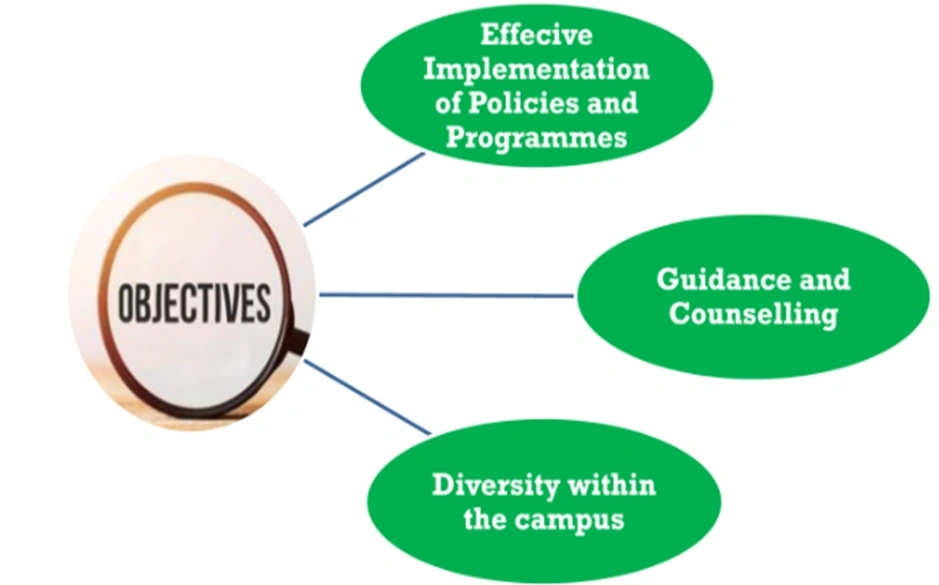
SCC has constituted the College Grievance Redressal Committee (CGRC), under the direction of the Principal, Rev. Dr. Thomas V. Thennadiyil. The CGRC was established to oversee the effective implementation of policies mandated by the UGC to redress student grievances.
The objective of the CGRC is to redress the grievances of individual students and also of a class. The students have a provision to drop their grievances in the suggestion boxes located at various places in the institution or scan the QR codes placed at strategic locations on campus and anonymously report their grievances. CGRC members ensure that genuine student grievances are resolved as a matter of priority.
Unresolved grievances at the departmental and clubs/association levels are referred to the College Grievance Redressal Committee. The CGRC members meet on the 5th of every month to track grievances received through the suggestion boxes, QR code links, departments and clubs/associations. Depending on the severity of the grievances, the matters are resolved by the committee with the approval of the Principal.
Kindly email your grievances to the following email: cgrc@claretcollege.edu.in
Constitution of Grievance Redressal Committee
| Sl. No | Grievance Redressal Committee Member | Designation | Contact No |
|---|---|---|---|
| 1 | Dr. Thomas Thennadivil | Chairman | 6361718834 |
| 2 | Dr. Arijit Roy | Member | 9008772640 |
| 3 | Dr. Sneha Singh | Member | 9886637198 |
| 4 | Ms. Verista Dcosta ,Student | Member | 9921709263 |
| 5 | Mr. Allen Gabriel, Student | Member | 9686638420 |
Internal Complaints Committee
St. Claret College firmly opposes any act of sexual harassment and any such behaviour is against the law under the University Grant Commission (Prevention, Prohibition and Redressal and Sexual Harassment of Women Employees and Students in Higher Educational Institutions) Regulation, 2015.
SCC constituted the Internal Complaints Committee in line with UGC regulation - ‘Prevention, Prohibition and Redressal of Sexual Harassment of Women Employees and Students in Higher Educational Institutions, UNIVERSITY GRANTS COMMISSION (Regulations 2015)’
Through this UGC Regulation, SCC is committed to providing protection against sexual harassment of women/students at workplace/College Campus and the prevention and redressal of complaints of sexual harassment and matters related to it.
Members of Internal Complaints Committee
| Sl. No | Committee Members | Designation | Mobile No. |
|---|---|---|---|
| 1 | Dr. Harmeet Matharu | Chairperson | 9632085608 |
| 2 | Dr. Christina H. | Member | 8778701035 |
| 3 | Ms. Sherin Jacob | Member | 9606300299 |
| 4 | Ms. Priscilla Nancy | Member | 9739862918 |
| 5 | Ms. Whidula Shine | Member | 8867250981 |
| 6 | Ms. Bhagylakshmi | Member | 8130013231 |
| 7 | Mr. Sonal Vincent, Student | Member | 9538817480 |
| 8 | Ms. Angela Ane Sebastian, Student | Member | 9744405314 |
| 9 | Ms. Khusboo Patel, Student | Member | 7760370397 |
Equal Opportunity Cell
India is potentially rich in human resources. To harvest talented resources, it is essential to promote inclusiveness in the present educational system, and the degree of democracy in higher education to a greater extent. Every Education Institution should become more responsive to the needs and constraints of the differently-abled group of the society.
St. Claret College is determined to provide a favourable and comfortable environment to all employees and students through special infrastructure, especially for those from marginalized backgrounds. The Equal Opportunity Cell of the college is directed to take every step in this direction. Discrimination against any person on the grounds of their disability or physical limitations and minority status is a gross violation of UGC accepted principles of equality and human rights and our country’s constitutional obligations.
Purpose of the Cell:
1. To facilitate a good environment and equal opportunities through awareness generation programmes.2. To enhance and improve the skills and knowledge of the students and staff concerning personal growth.
3. To provide the basic needs like textbooks, study materials, ramps, railings and accessible washrooms for students and faculty with physical disabilities.
4. Creation of equal platform by following institutional and Governmental reservation policy in admission and recruitment for SC, ST, PH, OBC, persons from religious and language minorities, differently abled persons and women.
The members of the Equal Opportunity Cell
| Sl. No | Name | Designation |
|---|---|---|
| 1 | Rev. Dr. Thomas V. Thennadiyil | Chairman & Principal |
| 2 | Dr. Zameer Pasha | Convener,(Minority Affairs) |
| 3 | Ms. Shashikala | Coordinator,(Women Welfare) |
| 4 | Dr. Atul Kumar Pandey | Coordinator,(Disability Affairs) |
| 5 | Mr. Shivaprasad B. S. | Coordinator,(SC/ST Affairs) |
| 6 | Mr. Somashekar N. | Coordinator,(Backward Class Affairs) |
Student Code of Conduct
- Every Student of St Claret College is called Claretine and every Claretine is expected to strive for excellence.
- Students shall abide by the rules and directives of the college and are expected to be worthy Claretines nourished by the values of universal love and respect for each person.
- Students should maintain a sense of decorum and discipline at all times, both inside and outside the campus. This requirement of discipline and silence is mandatory while attending classes and during any function or programme organised in the campus.
- USE OF SOCIAL MEDIA: Students are requested to be responsible in their use of Social Media. Strict Disciplinary Action & Criminal Proceedings will be initiated against those found guilty of using social media to defame the institution or any individual person.
-
Continuous striving for excellence, universal love, respect for others, and ardent
pursuit of truth being the characteristics of Claretine education, every student should
pledge not to indulge in any of the following acts which are detrimental to the values
mentioned:
- absenting from any class without valid reason and prior permission.
- shouting and whistling inside the class room.
- using mobile phone inside the college building.
- causing damage to college property.
- being present inside the college premises under the influence of alcohol/drugs and possessing any intoxicant.
- any act of disobedience to any of the members of the college faculty and staff.
- bullying, scuffle, fight and groupism adversely affecting the serene atmosphere of learning.
- Indulging in any of what is mentioned above is considered a serious act of indiscipline warranting serious and adequate disciplinary action.
- Ragging in all its forms is totally banned in St. Claret College. The College shall take strict action including but not limited to criminal proceeding and/or cancellation of admission against those found guilty of ragging and/or abetting it. The decision of the Anti-Ragging committee of the college shall be final and binding in this regard.
- Students shall always wear their ID card around their neck and produce the same to any member of the staff or College officials when asked for.
- Students are required to be at their seats before the stroke of the second bell for the commencement of classes. Students who do not report in time will not be allowed to the class. Disciplinary actions will be initiated against frequent late-comers.
- No student is allowed to leave the classroom without the permission of the teacher or until the class is dismissed.
- As a gesture of respect, students shall greet teachers on first meeting them for the day within the premises of the College, and whenever they meet them in public. As the teacher enters the class room, students must rise from their seats, greet him/her and remain standing till directed to sit.
- There should be complete silence on corridors during class hours to maintain an academic atmosphere. Students must not loiter on the corridors during the class hours.
- Active participation in co-curricular activities is an excellent aid to students' striving for excellence and is mandatory for every student.
- Moved by the rigor of academic goals of each student and the demands of excellence, each Claretine should take into confidence his/her class- mentor and maintain a healthy relationship with him/her; discuss any problem, academic or otherwise and arrive at a solution for the same.
- Dress and general appearance of the students shall be in good taste and in no way be offensive to the cultural ethos and norms. The following attires are among those not acceptable to be worn to college: tight-fitting, netted and transparent clothes, short skirts, torn jeans, track pants, sleeveless tops, crop tops, low-waste clothes, deep necks, cargos with multiple pockets and accessories and t-shirts with inscriptions.
- Smoking, chewing gum, chewing pan and use of any addictive substance is strictly prohibited within the campus. Those students who are found inside the college premises either under the influence of alcohol/drugs or in possession of any intoxicant will face stringent action including immediate dismissal and criminal proceedings.
- The campus must be kept clean and tidy at all times. The college is a temple of learning. Hence all the Claretines are required to maintain the beauty and the academic ambience of the campus. Littering and defacing the walls or de sks, damaging college property are not expected of any Claretine.
- Insubordination, habitual inattention, neglect of work, unbecoming language or conduct, obscenity in word or deed render a student liable to temporary or permanent dismissal.
- Boys and girls are expected to conduct themselves with dignity and maturity. In their interpersonal relationships, they must observe norms of decency, propriety and mutual respect. Any improper relationship will detract the students from their academic engagement and therefore, if noted, such students are liable for correction.
- Movements of vehicles in the college campus must be in a moderate speed. Students can park their vehicles inside the college campus only on production of parking pass issued from the office which will be issued only to those having valid driving license. Vehicles are to be parked in the allotted parking area and appropriate censures will be initiated against violators. While parking the vehicles on campus, students should maintain order and keep their vehicles locked. Honking inside the campus is strictly prohibited.
- The instructions given by the security officers on campus are to be adhered to.
- USE OF CELL PHONES: As indicated above, use of cell phones can cause impediments to the academic focus of the student and may be detrimental to the learning atmosphere. Students are not permitted to use mobile phones anywhere inside the college building unless the faculty requires the students to use cell phones in a particular class. If any student is found using the cell phone inside, it will be confiscated and will not be returned.
- Students are not allowed to carry with them or use in the campus/college any electrical or electronic gadget like CD players, digital cameras, radios, tape-records etc., without the prior permission from the Principal.
- Active participation or promotion of politics is not allowed inside the campus. Students are forbidden to organize or attend any meeting within the College or collect money for any purpose or to circulate among them any notice or petition of any kind or paste such objects on the College notice boards without the written permission from the Principal. They must not join any club or society or make any engagement that would interfere with their studies without the permission of the Principal.
- Functions of Associations, cultural programs including any kind of celebrations will be held after class hours and outside the class rooms. Practice for all programmes should be held either prior to or after the class hours. Students’ outside participation in sports, cultural and academic activities as representatives of the college can be done only with the written permission of the head of the institution.
- Use of internet by the students on campus is expected to be for their academic enrichment.
- In every thought, word and deed, Claretines are expected to respect, uphold and communicate the dignity, decorum and honour of the institution.
- Those who are guilty of serious misconduct or whose presence is detrimental to the order and discipline on the campus are liable to be expelled.
Class Attendance Requirement
- At the end of every semester, for each course and for the overall programme, students are required to have at least 75% of class attendance to be eligible to appear for the end semester examination as per the University regulation.
- Any student who has a shortage in this requirement will not be allowed to write any of the end-semester university examinations.
Leave and Attendance Regularization Policies
- All leaves are taken with prior permission from the class mentor/ head of the department. For up to a maximum of two days, the class mentors grant leaves. For more than two days of leave prior permission needs to be taken from the head of the department. Leave applications can be rejected either by the class mentor or the head of the department, if they are not convinced about the genuineness or the need.
- Any student who is absent from classes with permission for representing the college in seminars, conferences, sports and cultural activities will be rewarded class attendance for the hours the student has been legitimately absent.
- Only cases of hospitalization of more than three days with valid documents will be accepted for attendance regularization. The request for attendance shall be rejected if the documents submitted are not genuine. In each semester, the maximum number of days the institution can regularize attendance for a student is 10 days. All the other leave requirements for illness, family events and emergencies will have to be met by students outside the 75 percent attendance requirement stipulated by the affiliating university.
- In the case of hospitalization, the documents for attendance regularization should be submitted to the Vice Principal/ Principal with the signature of class mentor and head of the department within three working days after the student reports back to classes. Documents submitted after this deadline will not be accepted for attendance regularization.
- It is the responsibility of the students concerned to submit the documentary evidences for their absence to the respective coordinators/ class mentors/ heads of the department and ensure that the attendance is regularized on the institutional ERP (Edumerge).
- The students, parents and guardians are provided access to the institutional ERP (Edumerge) to regularly monitor the attendance records. Any discrepancy in the attendance entry must be submitted in writing to the head of the department at least three weeks prior to the commencement of the end semester University examinations. Any complaint regarding class attendance after this deadline will not be entertained.
Establishment of Committee for SC/ST
Any discrimination based on caste, creed, religion, language, ethnicity,
gender or disability is strictly prohibited in St Claret College. SCC will be
very sensitive while dealing with incidents of caste discrimination and strict
action will be taken against such cases. The Officials/faculty members should
also desist from any act of discrimination against SC/ST students on grounds
of their social origin. SCC also ensures that no official/ faculty member
indulge in any kind of discrimination against any community or category of
students.
Constitution of SC/ST Welfare Committee
| Sl. No | SC/ST Welfare Committee Member | Designation | Contact No |
|---|---|---|---|
| 1 | Dr. Thomas Thennadivil | Chairman | 6361718834 |
| 2 | Dr. Arijit Roy | Member | 9008772640 |
| 3 | Mr. Prashanth P. | Member | 8088004006 |
| 4 | Mr. Suresha N. | Member | 9448059767 |
| 5 | Ms. Johnsy Johnson | Member | 9663037411 |
| 6 | Mr. Prajwal Patel, Student | Member | 9880153021 |
| 7 | Ms. Jayanthi, Student | Member | 9611229787 |
| 8 | Mr. Jai Suriya, Student | Member | 8296056607 |